Pilonidal Sinus Treatment
Ignoring Recurrent Pain & Swelling Near the Tailbone Can Lead to Serious Infection
Specialized pilonidal sinus treatment with advanced Laser and surgical care. At Dr. Kamthe's Piles Clinic we focus on infection control, pain relief, faster healing and prevention of recurrence.
What is Pilonidal Sinus?
Understanding Pilonidal Sinus Disease
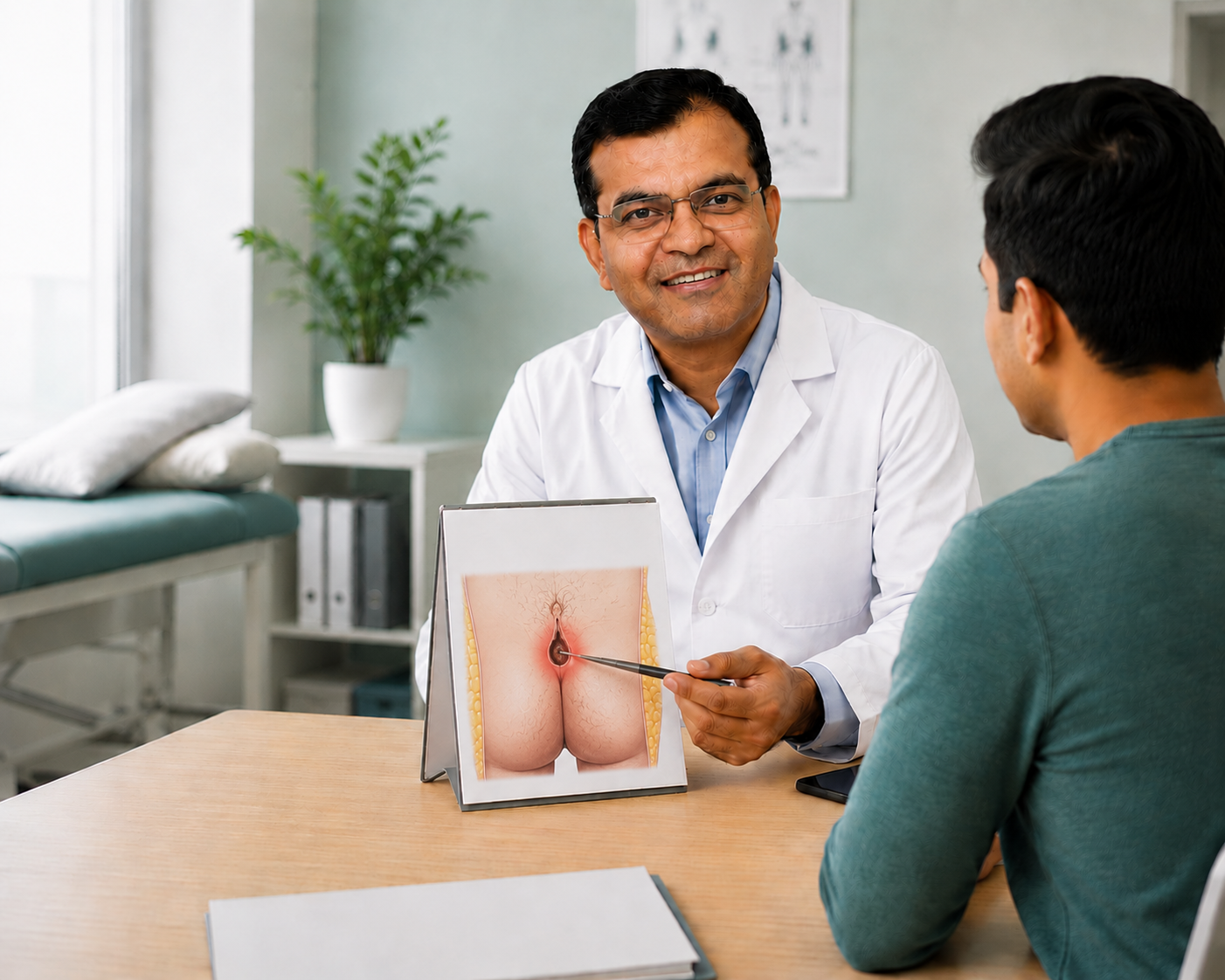
Pilonidal sinus is a small tunnel or cavity that develops in the skin near the tailbone, usually at the upper part of the buttock cleft.
The condition commonly develops because of trapped hair, friction, sweating, prolonged sitting or repeated skin irritation. Over time, the trapped hair and debris may cause infection, resulting in swelling, pus discharge and pain.
In many patients, pilonidal sinus begins as a small swelling or boil-like lesion. If untreated, the infection may spread and form recurrent abscesses or multiple sinus tracts.
More Commonly Seen In
- Young adults
- Individuals with prolonged sitting jobs
- People with excessive body hair
- Obese individuals
- Patients with poor hygiene or repeated friction near the tailbone region
How Does Pilonidal Sinus Develop?
Hair, Friction & Infection Play a Major Role
Pilonidal sinus usually develops when loose hair penetrates the skin because of pressure and friction. The body treats the hair as a foreign object, which may trigger infection and inflammation. Repeated irritation gradually forms a sinus tract beneath the skin.
Prolonged Sitting
Long sitting hours increase friction and pressure near the tailbone area — common in office workers, drivers and sedentary lifestyles.
Excessive Sweating & Friction
Sweating and repeated rubbing near the buttock cleft increase skin irritation and the risk of infection.
Hair Growth & Poor Hygiene
Loose hair accumulation and inadequate hygiene may worsen the condition and increase recurrence chances.
Obesity & Sedentary Lifestyle
Excess body weight and lack of physical activity contribute to increased pressure and skin irritation.
Symptoms of Pilonidal Sinus
Signs & Symptoms You Should Not Ignore
Symptoms may vary depending on infection severity and sinus formation.
Some patients experience repeated swelling and temporary relief when the pus drains, but the condition often recurs if the sinus tract remains untreated.
Types of Pilonidal Sinus
Acute & Chronic Pilonidal Disease
Acute Pilonidal Abscess
In acute infection, patients may experience:
- Severe pain
- Swelling
- Redness
- Fever
- Pus collection
This stage often requires immediate drainage and infection management.
Chronic Pilonidal Sinus
Chronic pilonidal sinus involves persistent or recurrent sinus tracts beneath the skin. Patients may experience:
- Repeated discharge
- Chronic irritation
- Multiple openings near the tailbone
- Recurring pain and infection
These cases often require advanced treatment for complete healing.
Complications of Untreated Pilonidal Sinus
Why Timely Treatment is Important
Ignoring pilonidal sinus symptoms may lead to:
Early treatment helps reduce infection spread and supports better recovery outcomes.
Diagnosis of Pilonidal Sinus
Proper Evaluation for Accurate Treatment Planning
At Dr. Kamthe's Piles Clinic, diagnosis begins with detailed evaluation of symptoms, infection history, discharge pattern and physical examination.
Clinical Assessment Helps Determine
- Severity of infection
- Number of sinus tracts
- Abscess formation
- Skin involvement
- Complexity of the condition
Why Proper Diagnosis Matters
Proper diagnosis is important for selecting the most effective treatment approach and preventing recurrence — especially in chronic or recurrent cases with multiple sinus tracts.
Pilonidal Sinus Treatment
Personalized Treatment Based on Infection & Severity
Treatment planning depends on the severity of infection, sinus complexity and patient condition. The goal is complete healing with reduced discomfort and lower recurrence risk.
Infection & Abscess Management
In infected cases, treatment may initially focus on:
- Controlling infection
- Reducing swelling
- Managing pain
- Draining abscess if required
This helps improve comfort before definitive treatment planning.
Surgical & Advanced Wound Care
In complex or recurrent cases, advanced surgical treatment and wound care management may be required. Treatment is planned carefully to ensure proper healing and reduce recurrence risk.

Laser Treatment
Laser Treatment for Pilonidal Sinus
Laser treatment is one of the advanced minimally invasive options available for pilonidal sinus management. Laser procedures help target the sinus tract while minimizing damage to surrounding tissues.
Benefits of Laser Pilonidal Sinus Treatment
- Reduced pain
- Minimal bleeding
- Faster healing
- Smaller wounds
- Short hospital stay
- Better cosmetic recovery
- Early return to routine activities
Especially useful for patients looking for faster recovery and minimally invasive treatment options.
Pilonidal Sinus Treatments
Advanced Treatment Options for Pilonidal Sinus
At Dr. Kamthe's Piles Clinic, we offer a range of specialized pilonidal sinus treatments tailored to each patient's condition, complexity, and recovery goals.
Laser Treatment
Pilonidal laser treatment offers a minimally invasive approach to address pilonidal cysts, utilizing focused laser energy to remove the cyst and promote efficient healing. This advanced technique often results in reduced pain, faster recovery, and decreased recurrence rates compared to traditional surgical methods.
Advanced Seton Therapy
As a leading clinic specializing in Pilonidal Sinus treatment, we excel in Advanced Seton Therapy, an alternative to contemporary surgical techniques. This procedure boasts an outstanding success rate. Utilizing herbal threads changed every seven days, the treatment duration varies based on the length of the pilonidal sinus tract.
Ksharsutra Treatment
For Pilonidal Sinus, we also offer the traditional Ayurvedic Ksharsutra Treatment. This involves the use of medicated threads to cut and heal the tract. The procedure, performed under local anesthesia, minimizes the chances of recurrence.
Surgery
Surgical procedures prove effective for one or more sinus tracts, addressing recurrence over a specified period. Local anesthesia is administered before the physician opens the wound, removes content from the lesions, and closes it with stitches.
And Many More
Ksharkarma, Z-plasty, Excision of the pilonidal sinus tract, and many more surgeries we do under one roof.
Why Choose Dr. Kamthe's Piles Clinic?
Specialized Care for Pilonidal Sinus & Anorectal Disorders
Patients trust Dr. Kamthe's Piles Clinic because of:
Our focus is on effective healing, patient comfort and long-term recovery.
Recovery & Post-Treatment Care
Proper Care Helps Prevent Recurrence
Recovery after pilonidal sinus treatment depends on wound care, hygiene and lifestyle management. Regular follow-up helps monitor healing and improve recovery outcomes.
Patient Stories
Real Patients. Real Recovery.
Many patients visiting Dr. Kamthe's Piles Clinic suffer from repeated swelling, pain and infection for months before seeking proper treatment. With advanced diagnosis and personalized treatment planning, patients experience significant relief and improved daily comfort.
View Patient Testimonials"I suffered from repeated swelling and pus discharge near my tailbone for almost a year. After Laser treatment and proper wound care at Dr. Kamthe's clinic, I finally recovered comfortably."
— Verified Patient
FAQ
Frequently Asked Questions
Consult a Specialist for Proper Pilonidal Sinus Treatment
Do not ignore repeated swelling, pus discharge or pain near the tailbone region. Early diagnosis and specialized treatment can help prevent complications and improve recovery.
Video Testimonials
Hear it from our patients
Real stories of relief, recovery and renewed comfort — shared by our patients.
Have questions about your pilonidal sinus symptoms?
Talk to our specialists today — confidential, expert and judgement-free care.