"Timely Hernia Treatment Can Prevent Serious Complications"
Specialized Hernia Care with Advanced Surgical & Minimally Invasive Treatment
Hernia is a common condition that develops when an internal organ or tissue pushes through a weak area in the muscle wall. Untreated hernia may gradually increase in size and lead to pain, digestive problems and complications. At Dr. Kamthe's Piles Clinic, we provide specialized diagnosis and treatment with a focus on patient safety, comfortable recovery and long-term results.
What Is Hernia?
Understanding Hernia & Abdominal Wall Weakness
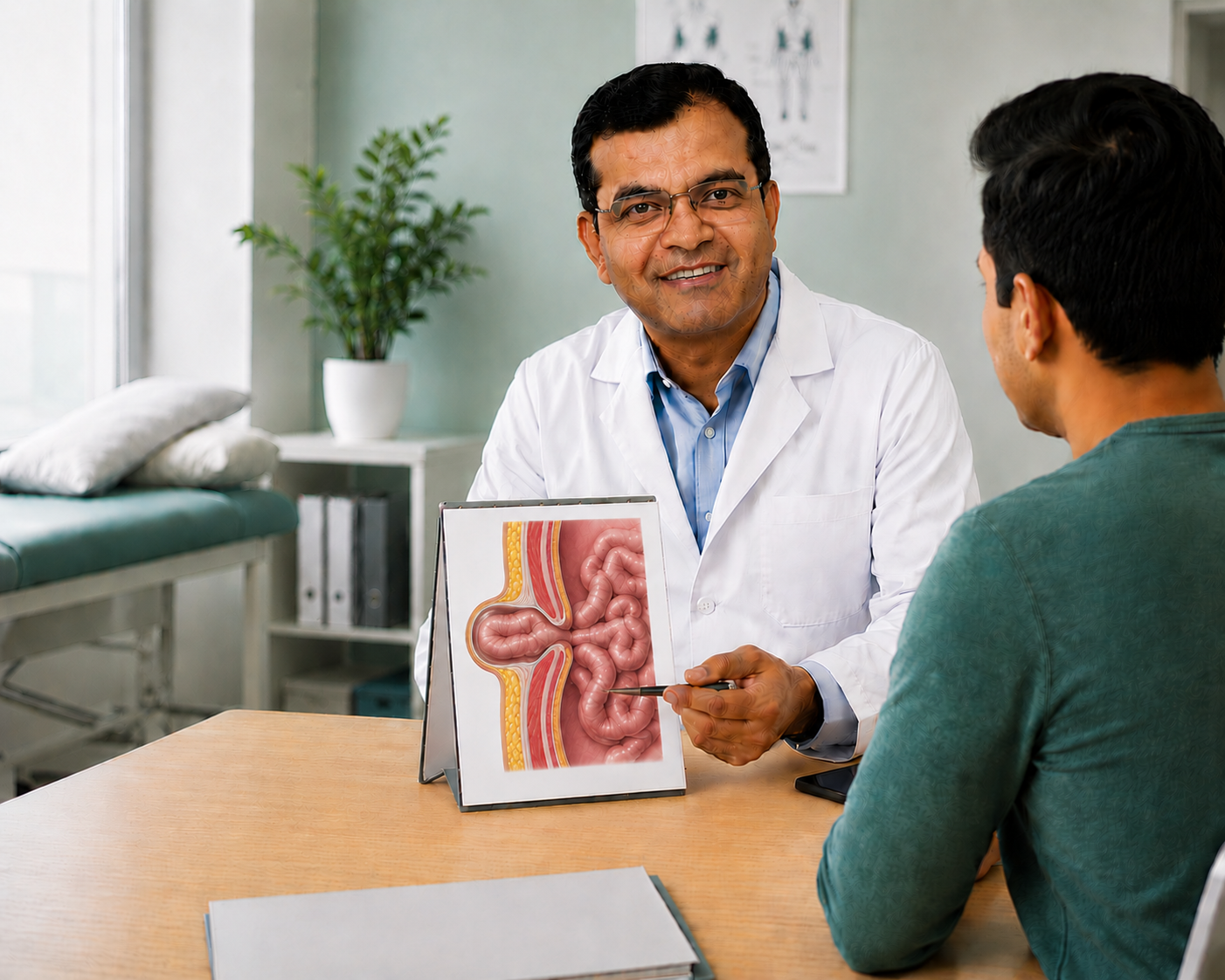
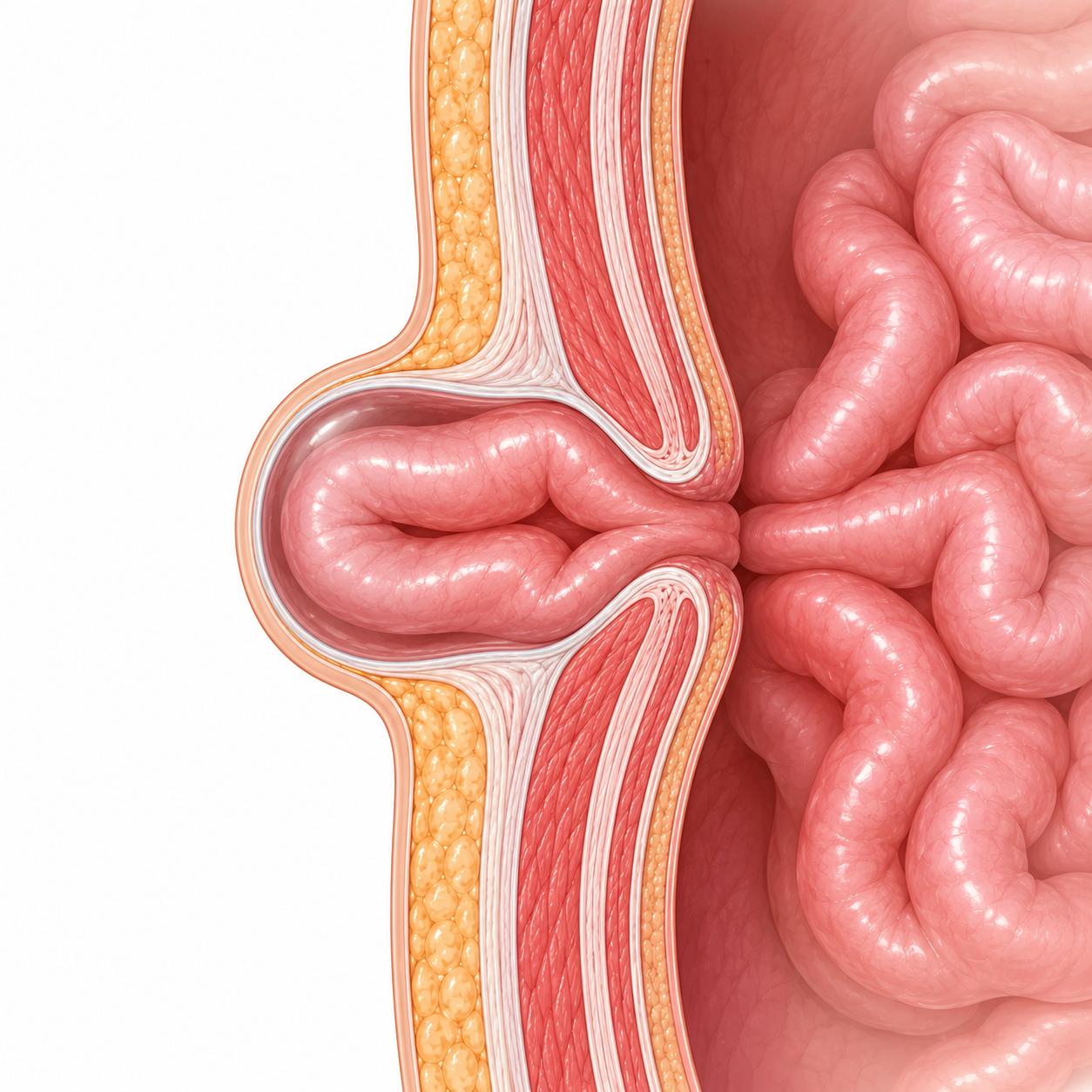
A hernia occurs when an internal organ, fatty tissue, or intestine pushes through a weak portion of the abdominal or muscular wall.
This weakness may develop gradually because of strain, pressure, heavy lifting, obesity, chronic cough, constipation, pregnancy, or muscle weakness.
The condition commonly appears as a swelling or bulge that may become more noticeable while standing, coughing, lifting weight, or performing physical activity. In many patients, the swelling may initially disappear while lying down — but as the condition progresses, the hernia may become painful and difficult to manage without treatment.
Although hernia may appear harmless initially, delayed treatment can increase the risk of complications such as obstruction, severe pain, and tissue damage.
Types
Different Types of Hernia
Hernias may occur in different parts of the body depending on the location of muscle weakness.
Inguinal Hernia
- Swelling near the groin
- Discomfort while walking
- Pain during lifting or coughing
- Heaviness in the lower abdomen
Umbilical Hernia
- Soft swelling around the navel
- Increases during coughing
- Visible bulge on strain
- Mild discomfort
Incisional Hernia
- Bulge near previous incision
- Discomfort at scar site
- Increases with strain
- May enlarge over time
Femoral Hernia
- Swelling in upper thigh
- Discomfort in groin
- Less common but risky
- Needs prompt evaluation
Hiatal Hernia
- Acidity & reflux
- Chest discomfort
- Digestive symptoms
- Difficulty swallowing
Causes
Common Factors That Increase Hernia Risk
Hernia usually develops because of increased pressure on weak muscles or tissues.
Heavy Weight Lifting
Frequent lifting of heavy objects increases abdominal pressure and may weaken muscle walls over time.
Chronic Constipation
Excessive straining during bowel movements puts repeated pressure on abdominal muscles and increases hernia risk.
Chronic Cough
Persistent coughing can gradually weaken abdominal muscles and contribute to hernia development.
Obesity
Excess body weight increases pressure on the abdominal wall and may lead to muscle weakness.
Pregnancy
Pregnancy-related abdominal pressure may increase the risk of certain hernias.
Previous Surgery
Weakness at surgical incision sites may lead to incisional hernia formation.
Symptoms & Risks
Signs You Should Not Ignore
Common Symptoms
- Visible swelling or bulge
- Pain while lifting or coughing
- Groin discomfort
- Heaviness in the abdomen
- Burning or dragging sensation
- Swelling that increases on standing
- Digestive discomfort in some cases
Complications If Untreated
Diagnosis
Proper Evaluation for Accurate Treatment Planning
At Dr. Kamthe's Piles Clinic, hernia diagnosis begins with clinical examination and understanding your symptoms, lifestyle and medical history.
Physical Examination
Detailed clinical examination to identify swelling and assess hernia characteristics.
Swelling Assessment
Evaluation of the bulge in standing, lying and straining positions.
Abdominal Examination
Comprehensive abdominal check to rule out related conditions.
Imaging Studies
Ultrasound or other imaging if needed to confirm type and extent.
Surgical Evaluation
Personalised treatment planning based on hernia type, size and severity.
Treatment
Personalized Hernia Treatment for Better Recovery
Treatment for hernia depends on the type, severity, symptoms and overall patient condition. The primary goal is to repair the weakened muscle wall and prevent recurrence or complications.
Lifestyle & Supportive Care
- Avoiding excessive strain
- Weight management
- Constipation management
- Physical activity guidance
Supportive only — hernia generally needs surgical correction for permanent cure.
Minimally Invasive Procedures
- Smaller incisions
- Reduced post-op pain
- Faster healing
- Shorter hospital stay
- Early return to routine
Modern techniques designed for comfort and quick recovery.
Surgical Hernia Repair
- Strengthens weak muscle wall
- Prevents further protrusion
- Advanced repair techniques
- Long-term stability
- Reduced recurrence risk
Definitive treatment planned to your individual hernia profile.
Why Us
Specialized Care with Focus on Recovery & Comfort
Patients trust Dr. Kamthe's Piles Clinic for safe, accurate and patient-focused hernia care.
Specialized Surgical Care
Anorectal & surgical expertise under one roof.
Personalized Treatment
Plans tailored to your hernia type and condition.
Comfortable Environment
Hygienic, modern hospital setup for safe recovery.
Advanced Approach
Modern minimally invasive techniques where suitable.
Experienced Guidance
Decades of clinical experience for better outcomes.
Cashless & Mediclaim
Insurance & reimbursement support throughout care.
Recovery
Recovery Guidance for Long-Term Healing
Recovery after hernia treatment depends on proper care and lifestyle management.
Follow-up care plays an important role in ensuring proper healing and reducing recurrence risk.
Patient Stories
Real Patients. Real Recovery.
Many patients delay hernia treatment because the swelling initially appears painless or manageable. With timely diagnosis and proper treatment, patients are able to recover comfortably and return to normal activities with confidence.
View Patient TestimonialsFAQ
Frequently Asked Questions
Video Testimonials
Hear it from our patients
Real stories of relief, recovery and renewed comfort — shared by our patients.
Consult a Specialist for Proper Hernia Treatment
Do not ignore swelling, abdominal discomfort, or groin pain. Early diagnosis and timely treatment can help prevent complications and improve recovery.