
Early diagnosis of anal polyps prevents long-term complications
Specialized diagnosis and treatment for anal polyps and rectal growths — accurate evaluation, video rectoscopy and minimally invasive removal, all in one clinic.
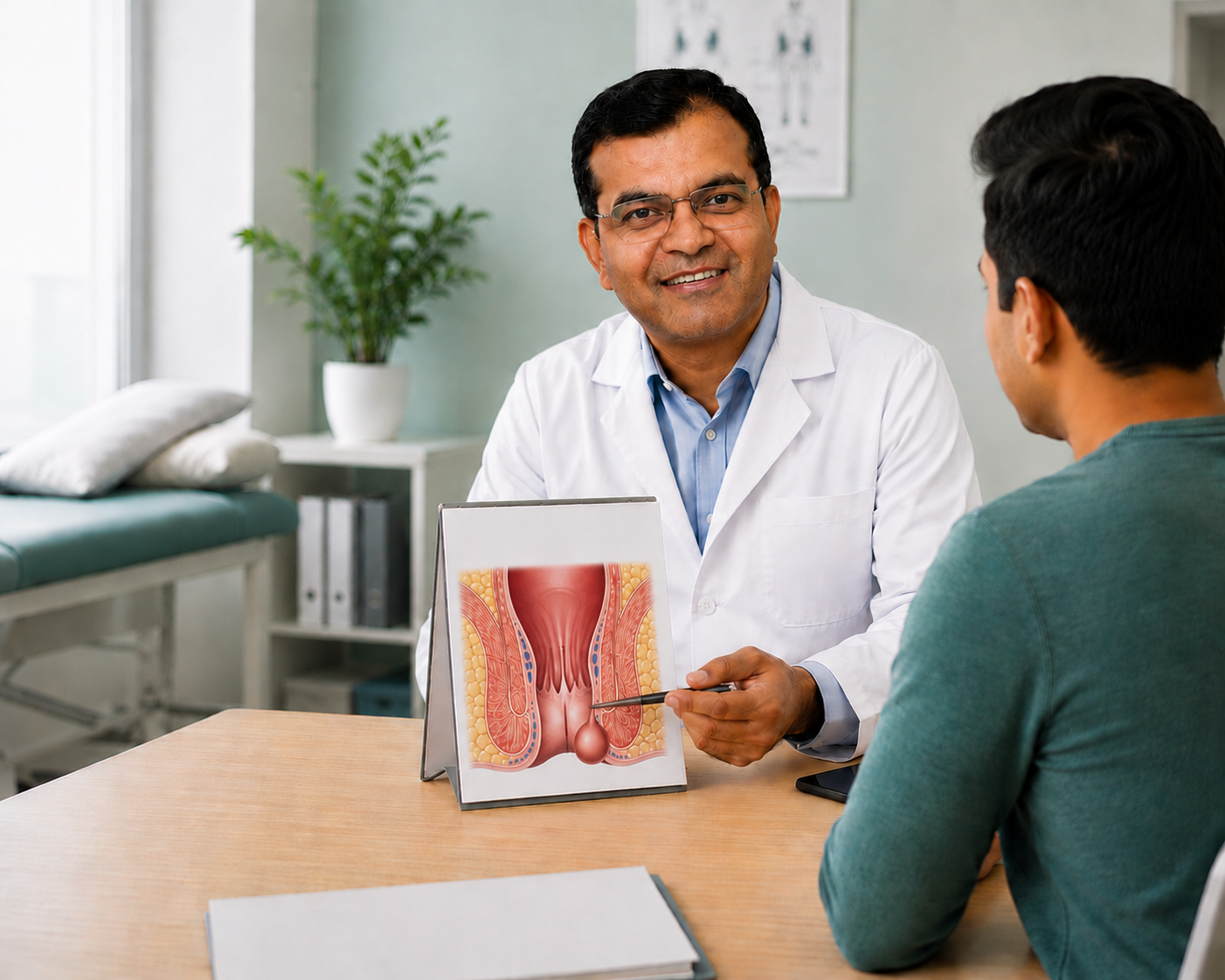
What is an Anal Polyp?
An abnormal growth in the anal or rectal lining
Many patients mistake anal polyps for piles because both can present with bleeding — proper examination is the only way to know the difference.
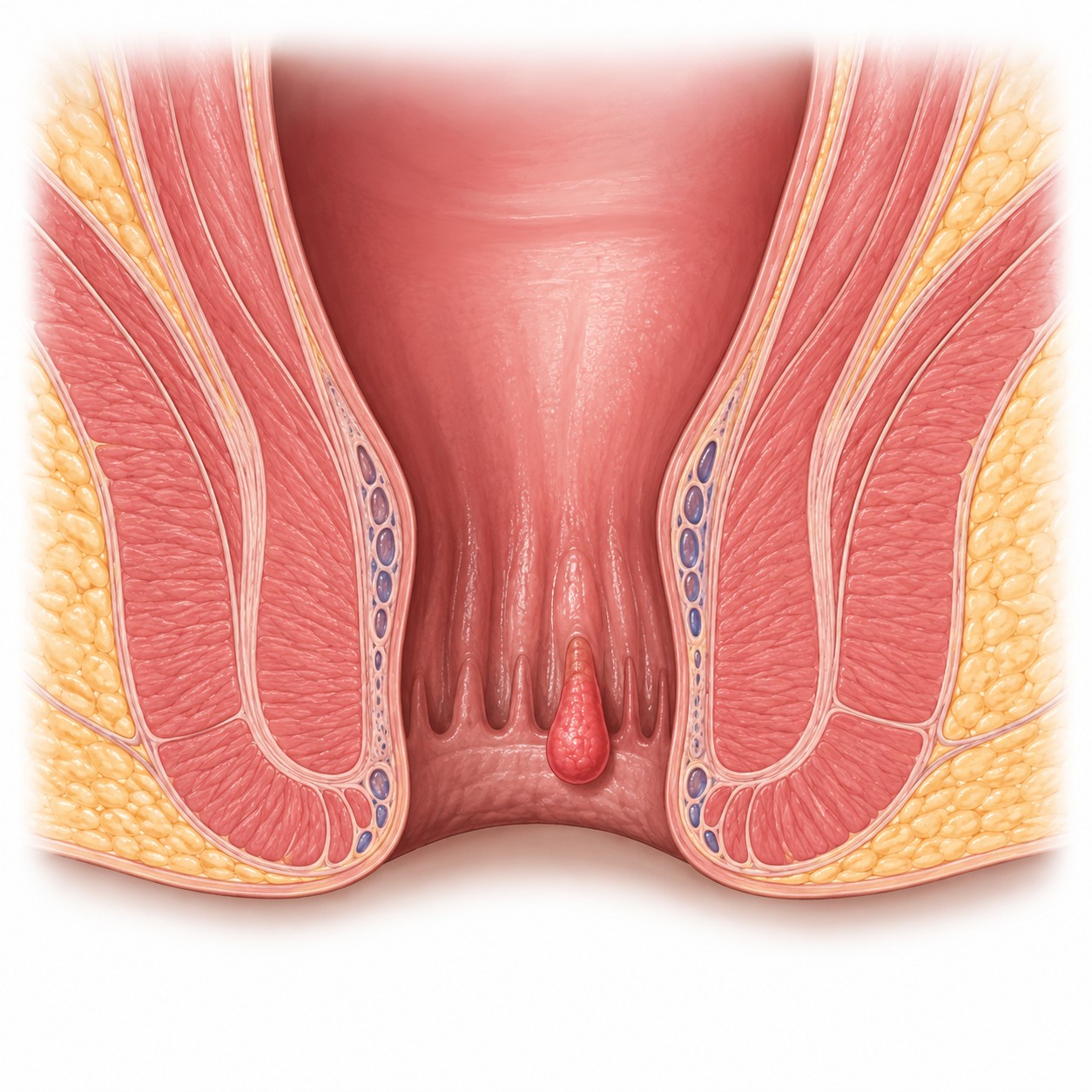
An anal polyp is a small abnormal growth that develops in the lining of the anal canal or lower rectum. Polyps vary in size and shape — some remain small and asymptomatic, while others gradually enlarge and cause bleeding, mucus discharge, irritation or bowel discomfort.
Although many polyps are non-cancerous, accurate examination is important to determine the nature of the growth and plan suitable treatment. Early detection improves outcomes and prevents further complications.
Why Polyps Develop
Common factors behind polyp formation
The exact cause varies from patient to patient. Most polyps trace back to a combination of these underlying factors.
STEP 01
Chronic Inflammation
Long-standing irritation or inflammation in the anal or rectal lining can trigger abnormal tissue growth.
STEP 02
Digestive & Bowel Disorders
Certain bowel conditions and digestive disturbances may contribute to changes in the rectal lining.
STEP 03
Family History & Age
Some patients carry an increased risk because of age-related or hereditary factors.
STEP 04
Constipation & Straining
Repeated pressure and irritation from constipation and excessive straining worsen anorectal health.
STEP 05
Lifestyle & Diet
Low-fiber diet, dehydration and a sedentary lifestyle affect digestive and bowel health over time.
Types of Anal Polyps
Different forms of polyps, different plans
Polyps differ in size, structure and tissue characteristics. Identifying the type guides treatment.
Inflammatory Polyps
These develop because of chronic irritation or inflammation in the rectal region. They are usually a response to underlying bowel inflammation and may resolve when the trigger is treated.
Symptoms
Signs you should not ignore
Many anal polyps stay silent at first. As the growth enlarges, the following symptoms often appear. Persistent bleeding or bowel discomfort always deserves specialist evaluation.
Repeated bleeding, mucus discharge or a feeling of a growth — book an evaluation.
Anal Polyp vs Piles
Similar symptoms, different conditions
Both can cause bleeding during bowel movements — but they need different treatment plans.
Diagnosis
Accurate evaluation, every time
Video rectoscopy plays an important role in proper anal and rectal evaluation. It helps visualize internal growths, identify associated disorders and plan accurate treatment.
- Size & location
- Number of polyps
- Tissue nature
- Associated conditions
Symptom & history review
Bowel habits, digestive history and bleeding pattern are recorded in detail.
Clinical examination
Focused anorectal exam to assess location, size and associated conditions.
Video rectoscopy
Real-time visual evaluation of the polyp, surrounding tissue and anorectal lining.
Treatment plan
Personalised plan based on size, symptoms, location and patient condition.
Anal Polyp Treatment
Personalized based on size & severity
Three care tracks, chosen by the specialist after evaluating polyp size, location, symptoms and overall patient condition.
Observation & Monitoring
Small, asymptomatic polyps may simply require regular monitoring under specialist guidance.
Medicines & Digestive Care
Medicines and bowel-habit guidance reduce irritation, control symptoms and support healing.
Minimally Invasive Removal
When required, safe, focused removal procedures are planned around comfort and quick recovery.
Operational Treatments
Advanced Treatment Options for Anal Polyp
At Dr. Kamthe's Piles Clinic, we offer a range of specialized anal polyp treatments tailored to each patient's condition, complexity, and recovery goals.
1. Laser Treatment
Our expertise lies in conducting top-notch laser treatments, known for their brief recovery periods. This straightforward and pain-free procedure is both easy and efficient, devoid of blood.
2. Advanced Seton Therapy
As a premier clinic for Advanced Seton Therapy, we offer an excellent alternative to modern surgical techniques. Achieving a remarkable success rate, our procedure involves the use of herbal threads, changed every seven days for optimal results.
3. Ksharsutra Treatment
Explore the traditional Ayurvedic Ksharsutra Treatment with us, utilizing medicated threads to delicately cut and heal the wound. Administered under local anesthesia, this treatment minimizes the chances of recurrence.
4. Surgical Removal
Opting for surgical removal is a viable choice for eliminating polyps from the anal canal.
Why Dr. Kamthe's Piles Clinic
Specialized proctology, patient-first care
Recovery & Post-Treatment Care
Healthy bowel habits, better recovery
Recovery depends on the treatment type and patient condition. Long-term anorectal health relies on simple, sustainable digestive habits.
FAQs
Frequently asked questions
Video Testimonials
Hear it from our patients
Real stories of relief, recovery and renewed comfort — shared by our patients.
Consult a specialist for proper anal polyp evaluation
Do not ignore bleeding, bowel discomfort or unusual growth near the anal region. Early diagnosis prevents complications.