
Facilities
Endoscopy
A modern, minimally invasive diagnostic procedure to examine internal organs without surgical incisions — for accurate diagnosis and early treatment planning.
What is Endoscopy?
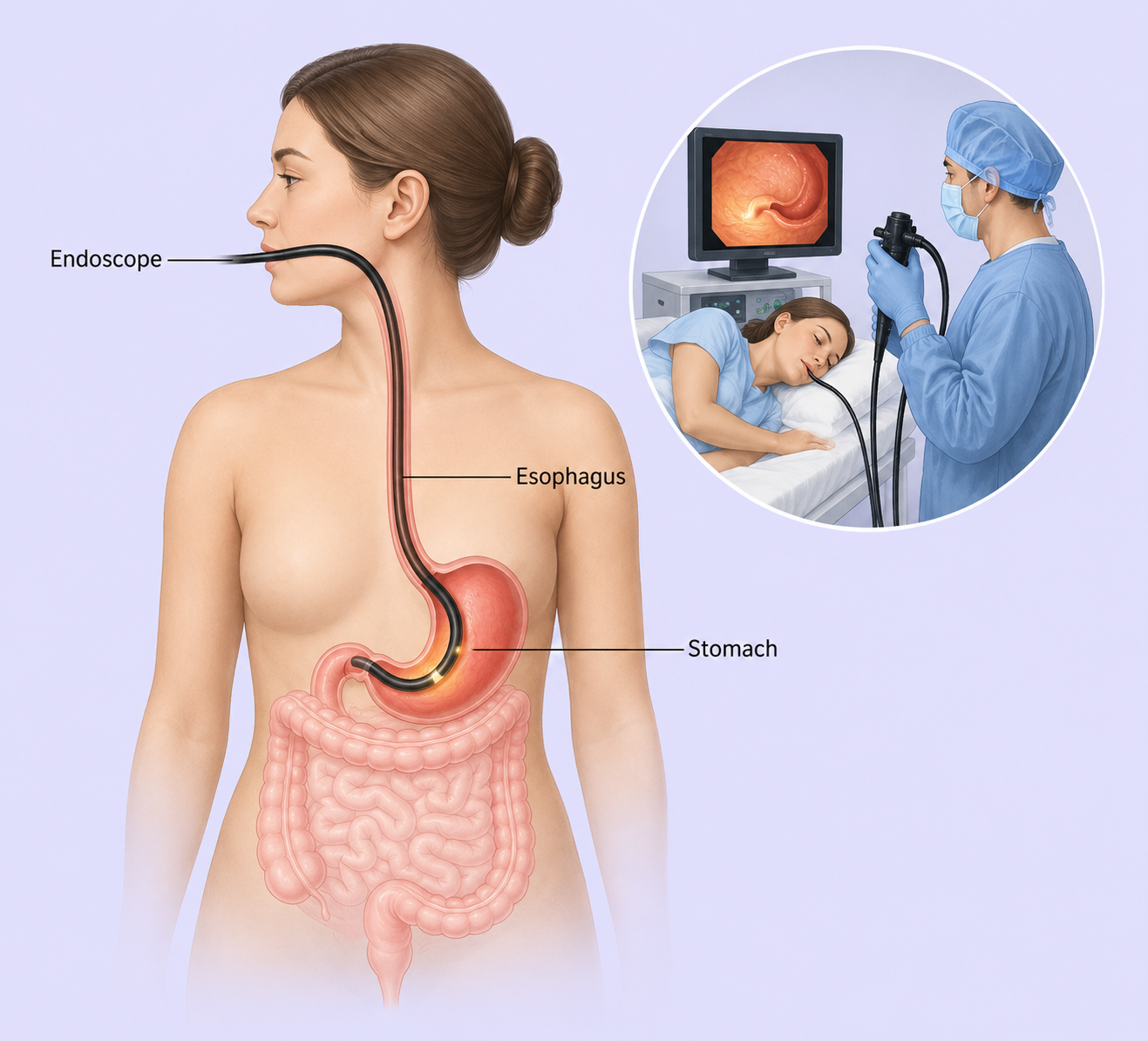
Endoscopy is a modern diagnostic procedure that allows doctors to examine internal organs without making a surgical incision. It helps in clearly viewing areas that cannot be fully assessed through X-rays or ultrasound.
During the procedure, a thin, flexible tube called an endoscope is passed through a natural body opening. The endoscope has a light and camera attached to it, which helps the doctor view the internal organs on a monitor.
Indications
When is Endoscopy Recommended?
Endoscopy is commonly advised for digestive system problems and helps in accurate diagnosis of symptoms such as:
In some cases, endoscopy may also be used to take a small tissue sample, known as a biopsy, for laboratory testing.
Types
Types of Endoscopy
Different types of endoscopy are named according to the organ or body part being examined.
Gastroscopy
Stomach
Colonoscopy
Colon
Endoscopy helps doctors detect problems early and plan the right treatment.
Need an Endoscopy evaluation?
Talk to our specialists for accurate diagnosis and personalised treatment planning.