
Facilities
Biofeedback Therapy (BFT)
A non-surgical, instrument-assisted training therapy to improve pelvic floor and anorectal muscle coordination — for chronic constipation and fecal incontinence.
What is Biofeedback Therapy?
Biofeedback Therapy, also known as BFT, is a non-surgical, instrument-assisted training therapy used to improve the function and coordination of pelvic floor and anorectal muscles.
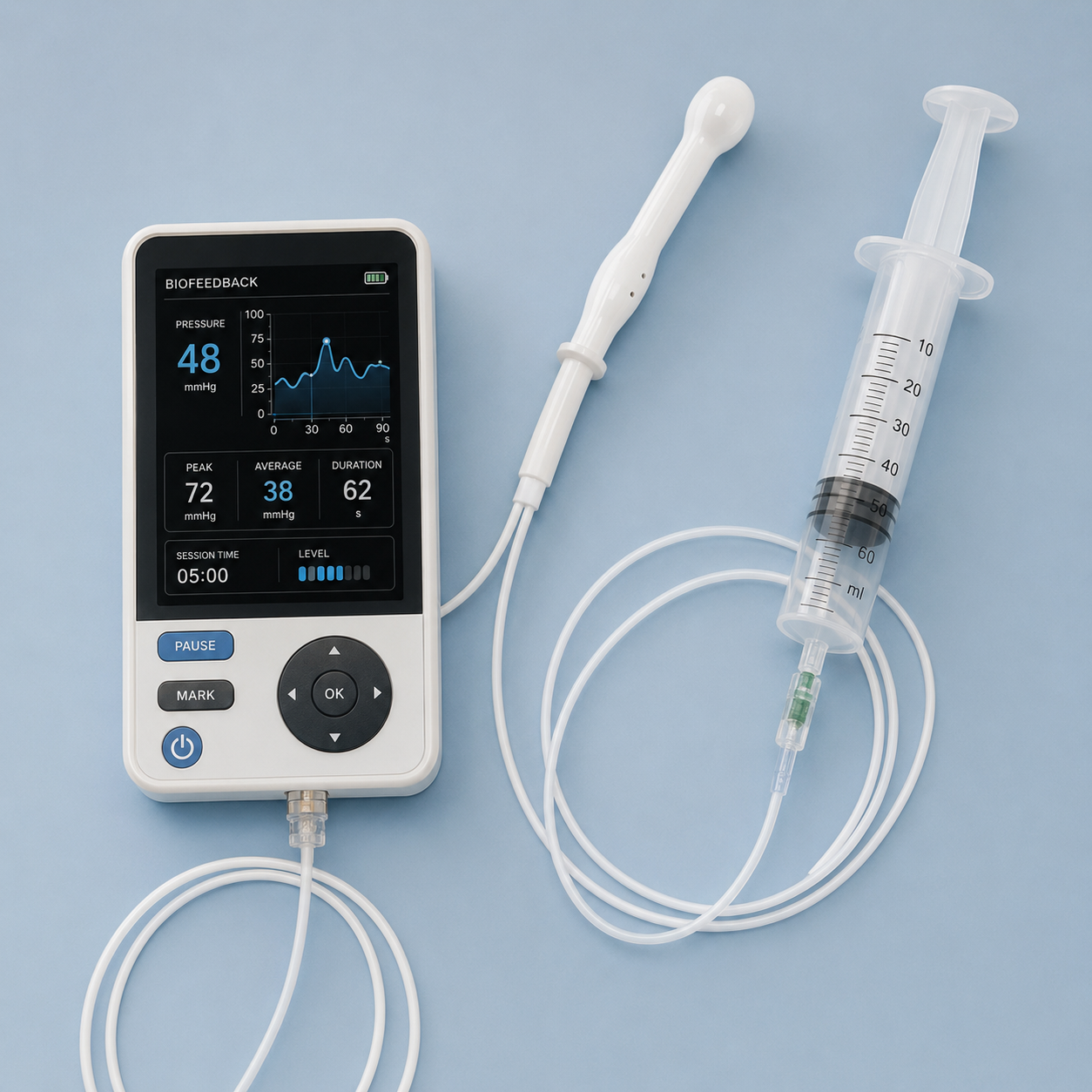
In this therapy, special equipment records the activity of the rectum, anal sphincter, pelvic floor muscles, and abdominal muscles. This activity is then shown on a monitor so that both the patient and therapist can understand how the muscles are working.
Biofeedback therapy is especially useful because it helps patients see and understand their muscle activity in real time and then learn the correct way to control those muscles.
The main aims of anorectal biofeedback therapy:
- Strengthen the pelvic floor muscles
- Improve anal sphincter control
- Retrain rectal sensation
- Coordinate abdominal pressure with pelvic floor relaxation
- Improve stool evacuation
- Reduce leakage of stool in selected cases
Use 1
Biofeedback Therapy for Chronic Constipation
Helpful when constipation is caused by poor coordination between abdominal and pelvic floor muscles — known as pelvic floor dyssynergia.
In a normal bowel movement, when stool enters the rectum the person feels an urge to pass stool. When ready, the abdominal muscles push down and the anal sphincter muscles relax, allowing stool to pass smoothly.
In some patients, the anal sphincter muscles tighten instead of relaxing while trying to pass stool. This creates a functional blockage, making stool evacuation difficult even when there is no physical obstruction.
This may lead to symptoms such as:
Biofeedback therapy helps retrain these muscles so the anal sphincter relaxes properly while the abdominal muscles push effectively. With repeated training, patients learn the correct muscle coordination required for smoother bowel movement.
Use 2
Biofeedback Therapy for Fecal Incontinence
Helpful when the anal sphincter muscles are weak, slow to respond, or poorly coordinated — leading to accidental stool leakage.
Normally, when stool enters the rectum, the anal sphincter muscles tighten to prevent leakage. If these muscles are weak, delayed in response, or poorly coordinated, stool leakage may occur.
Biofeedback therapy may help patients with fecal incontinence by:
- Strengthening the anal sphincter muscles
- Improving awareness of rectal filling
- Improving control over bowel movements
- Training the patient to contract the muscles at the right time
- Supporting pelvic floor rehabilitation
This therapy is often combined with pelvic floor physiotherapy and lifestyle guidance for better results.
The Procedure
How is Biofeedback Therapy Performed?
During biofeedback therapy, a small manometry probe with a balloon may be placed in the rectum and anal canal. This probe records pressure changes during different muscle movements.
The patient may be asked to perform certain actions such as:
- Squeezing the anal muscles
- Relaxing the pelvic floor
- Pushing down as if trying to pass stool
- Responding to the feeling of balloon inflation
The pressure changes are displayed on a monitor. The therapist explains what is happening and guides the patient to correct the muscle movement.
For Constipation (Dyssynergia)
Teaches the patient how to create proper abdominal push while relaxing the anal sphincter at the same time.
For Fecal Incontinence
Improves the strength, timing, and control of anal sphincter contraction.
Complementary Care
Herbal & Ayurvedic Medication
Integrating natural therapies with biofeedback for a holistic, patient-friendly treatment experience.
At Dr. Kamthe's Piles Clinic, we integrate herbal medication and Ayurvedic remedies as a complementary approach to our biofeedback therapy. These natural therapies are designed to enhance digestive health, reduce inflammation, and support the body's healing process.
Benefits of Herbal & Ayurvedic Support:
- Promotes natural bowel regulation and relieves constipation
- Reduces anal discomfort, swelling, and irritation associated with piles, fissures, and fistulas
- Enhances overall digestive health and improves nutrient absorption
- Works in harmony with biofeedback therapy, aiding faster recovery and long-term maintenance
Our herbal formulations are clinically selected, safe, and prepared with high-quality Ayurvedic ingredients. They are customized to each patient's condition and integrated seamlessly with modern therapies to provide a holistic, patient-friendly treatment experience.
Why Choose This Approach?
Combining biofeedback therapy with herbal and Ayurvedic support ensures that your treatment is not only effective but also gentle on the body, addressing both symptoms and root causes.
Is Biofeedback Therapy Painful?
Biofeedback therapy is generally not painful. Some patients may feel mild discomfort or pressure during the placement of the probe or balloon, but the procedure is usually well tolerated.
It does not involve surgery, cuts, injections, or anesthesia. Patients can usually return to their routine activities after the session.
Benefits
Benefits of Biofeedback Therapy
Indications
Who May Need Biofeedback Therapy?
A doctor may advise this therapy after clinical examination and diagnostic tests such as anorectal manometry.
How Many Sessions Are Required?
The number of sessions may vary depending on the patient's condition, muscle response, and severity of symptoms.
Some patients may need only a few sessions, while others may require a structured training program over several weeks. Periodic follow-up or reinforcement sessions may be advised to maintain long-term improvement.
Regular practice of the techniques taught during therapy plays an important role in achieving better results.
Conclusion
Biofeedback Therapy is a safe, non-surgical, and effective training-based therapy for selected anorectal conditions. It is especially useful in patients with chronic constipation caused by pelvic floor dyssynergia and in patients with fecal incontinence due to weak or poorly coordinated sphincter muscles.
By helping patients understand and control their pelvic floor and anorectal muscles, biofeedback therapy can improve bowel function, stool evacuation, and quality of life.
Considering Biofeedback Therapy?
Talk to our specialists for evaluation and a personalised pelvic floor retraining plan.